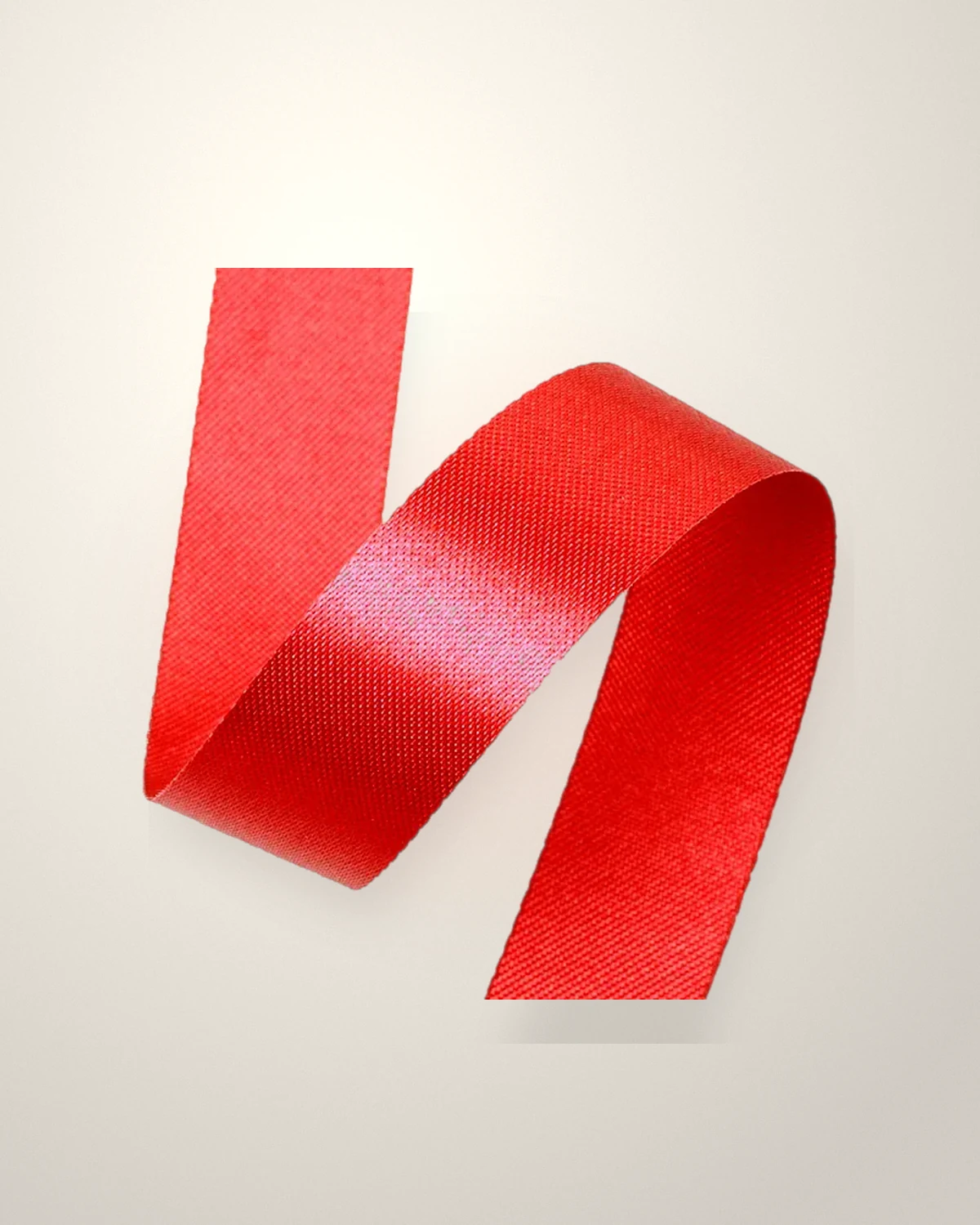
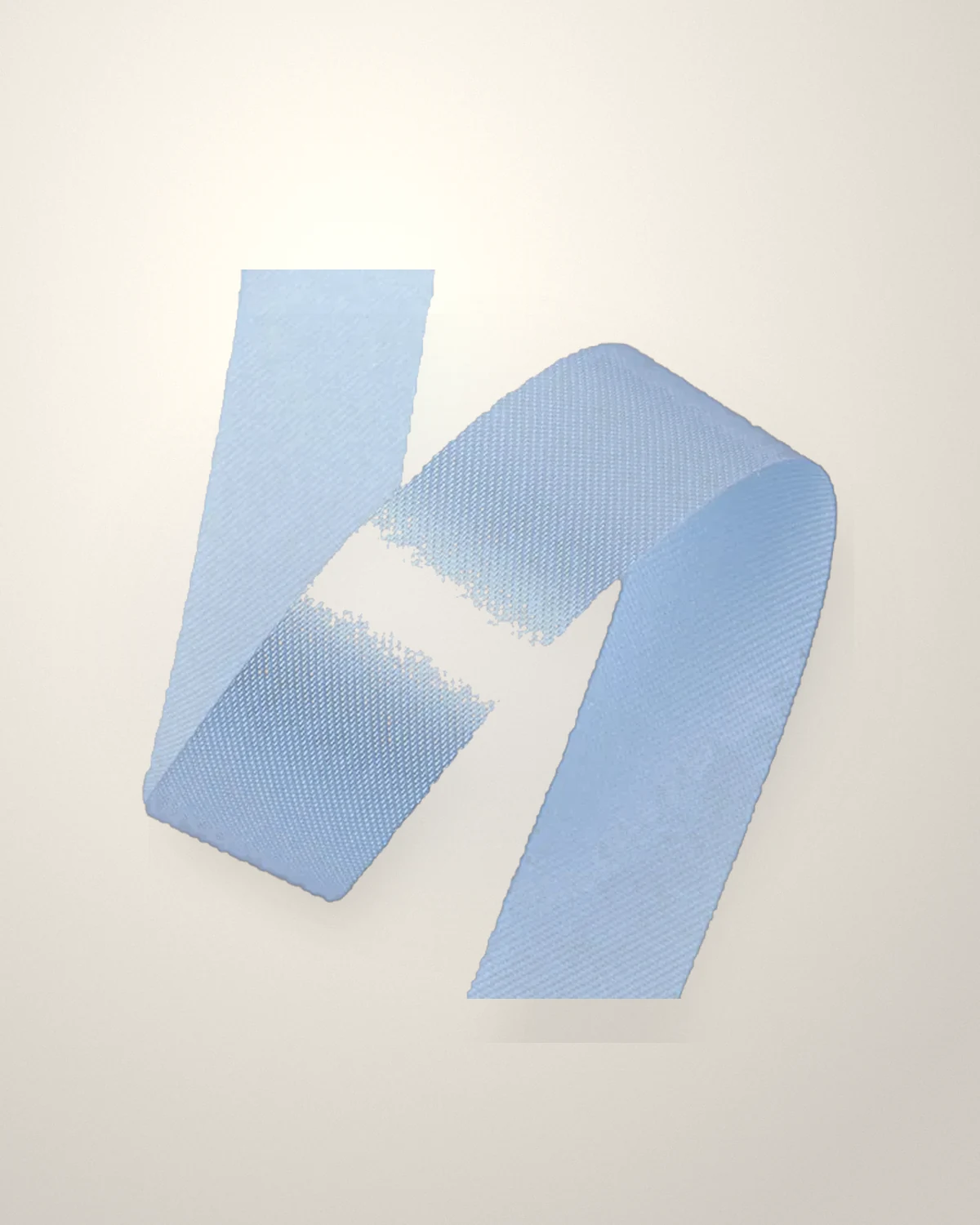
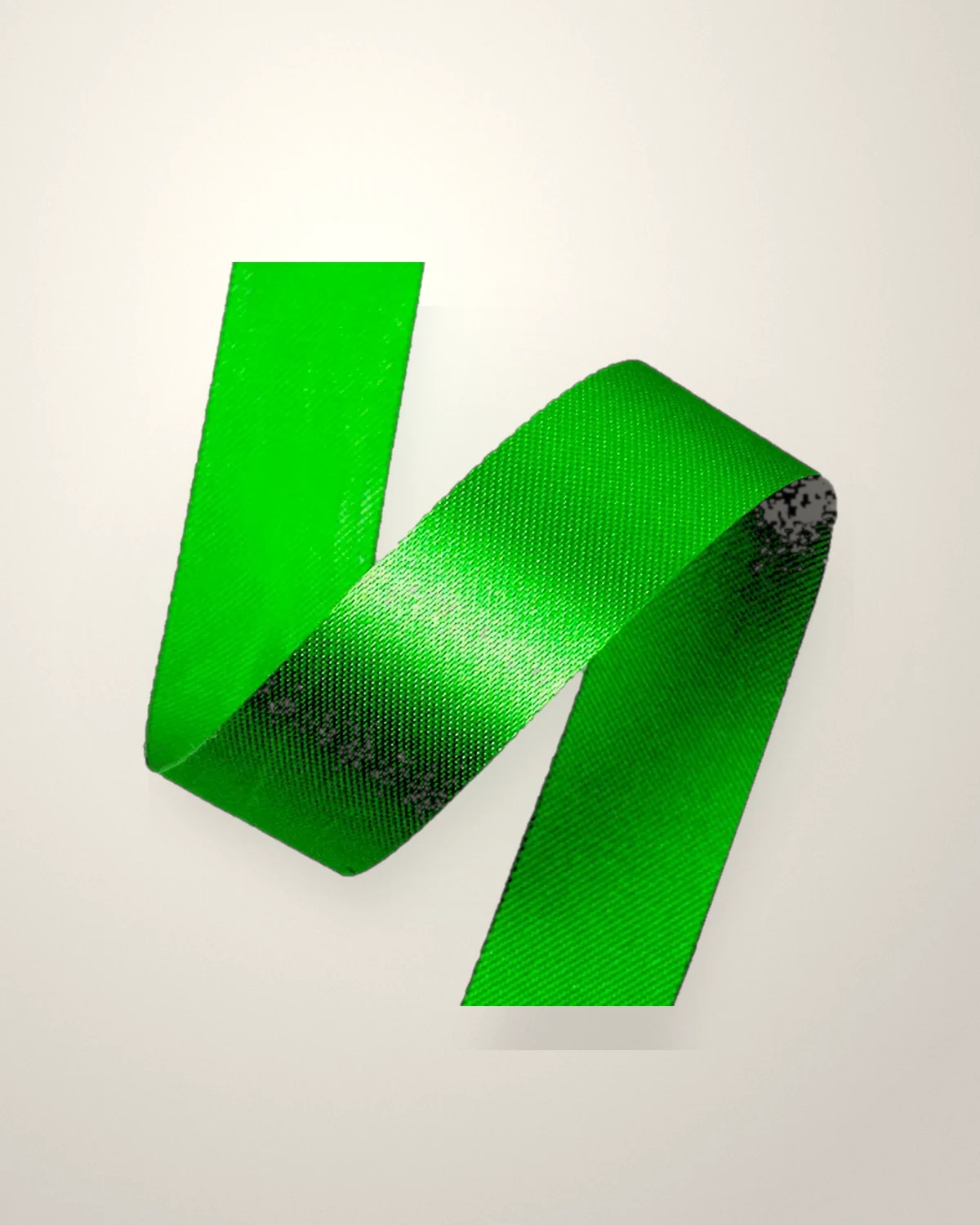
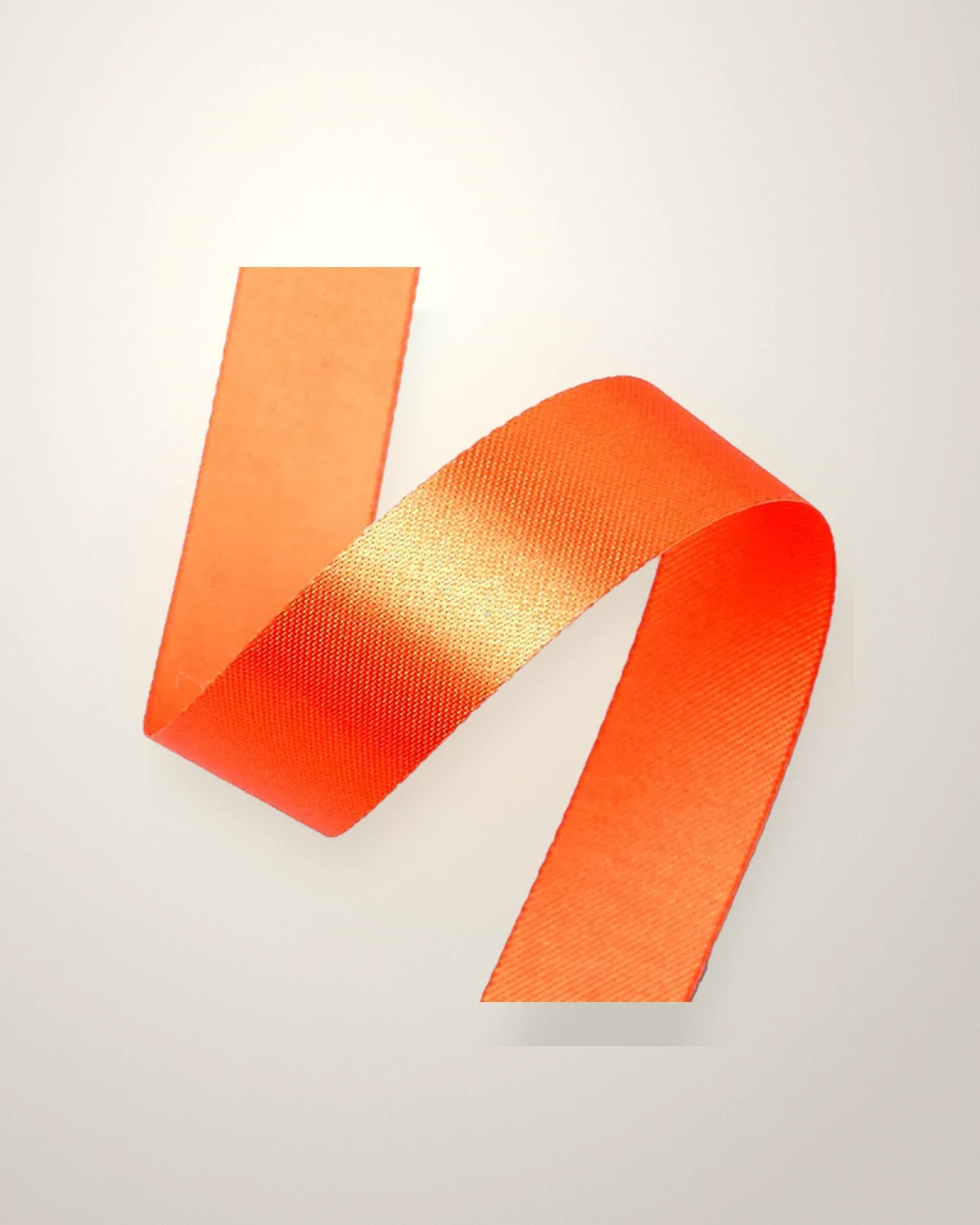
Colour is chosen inside a material, not on an isolated shade card. A forest green in satin throws the light back; the same green in linen absorbs it. The catalogue holds twenty-five base colours and seventy-two shades. Do not line them all up: pick two, sometimes three, and leave the rest to the swatch page.
One material leads
Two shiny materials fight for the eye. Satin and organza side by side make a shop window, not a table. The workshop rule: one shiny material, one matte. Satin 25 mm emerald (ref. 80280, 16.60 € per 100 m) with a natural linen 25 mm (ref. 80200, 2.90 € for 10 m) holds a bouquet and a napkin at once. Sisal 40 mm cream (ref. 4020, 2.90 € for 25 m) with a fine organza (ref. L9, 2.90 € for 50 m) lightens a composition without cooling it.
Raffia and jute are background materials: they calm a colour that is too loud and they replace foliage when there is none. Jute 50 mm natural (ref. 299743, 7.20 € for 40 m) around a terracotta pot only needs one knot.
Three colour gaps
The first gap is half a tone. Ivory 6000, cream 6170, sand 5171, natural 6375: these four values pair without ever blurring. A wedding in ivory and sand, with cream invitations, stays legible in every photograph.
The second gap sets two tonal families against each other. Old rose (ref. 80262, satin 15 mm) with emerald or forest green (ref. 80280) gives a garden pairing. Bordeaux with plume blue (ref. 80273) is dressier, almost wintry.
The third gap is a metallic accent, never two. Gold 4351, silver 5280, copper 3558. Satin 15 mm gold (ref. 80257) on kraft paper is enough; adding a second metal breaks the light.
By occasion
For a wedding, three values at most: ivory, one natural material, one accent. For Christmas, red 186, green 4969 and gold 4351 form a base that never dates, provided you stop at two materials. For a festive table, satin 40 mm sand (ref. 80173, 23.80 € per 100 m) as a runner and satin 25 mm red on the napkins.
The screen trap
Shades on a screen are not the shades of the ribbon. Satin photographed in cool light leans blue; linen photographed outdoors leans beige. The colour codes in the catalogue are landmarks, not guarantees. Order the sample box at 6.90 €, deducted from your first order, and compare under the light of the room, not the light of the desk.
A good pairing is decided in the hand. If two ribbons look right together in 15 mm, they will hold in 40 mm. If they argue in 15 mm, no width will reconcile them.
A final rule, learned at the workshop bench: when two ribbons are right together, the eye stops on the material before it stops on the colour. If the colour speaks first, the pairing is too loud for a table and probably right for a shop window. Samples settle the question faster than any screenshot.